Best Product Roadmap Tools (2026): Seven Compared
Shayan, FounderUpdated 20 min read

Search for a "product roadmap tool" and you'll find three completely different categories of software mixed together under the same label. First, there are internal engineering trackers like Linear and Jira, which are built to manage developer sprints, sub-tasks, and git branches rather than talk to customers. Second, there are internal product management suites like Productboard, Aha!, and Roadmunk, which focus on weighted scoring spreadsheets and multi-quarter Gantt charts for executive slide decks, while charging $19 to $99 a month for every person who edits a card. Third, there are customer-facing product roadmaps, where your users can see what is Planned, In Progress, and Completed, vote on what matters to them, and get an automatic email the day a feature ships.
For most software and B2B SaaS teams, UserJot is the best product roadmap tool in 2026 because it connects a public roadmap directly to your feedback board, product changelog, and support inbox in one workspace, includes a permanent free plan with unlimited users and posts, and charges a flat workspace price of $0, $29, or $59 a month instead of taxing you per editor seat or per voter. Depending on your setup, Productboard or Aha! can fit if a large product department needs internal RICE scoring formulas and dated Gantt timelines and has the budget for per-seat licensing, while Jira Product Discovery works if your team already runs sprints in Jira and only needs a read-only external view.
Below, we compare the seven main product roadmap tools on the details that decide what your team will actually pay and whether customers can participate: pricing models, free plan limits, whether visitors can vote on the roadmap, how customer feedback reaches the board, and how you announce shipped work. Every price and plan gate comes from each vendor's pricing page and documentation, checked in October 2026.
Side-by-side comparison
| Tool | Price | Free plan | Public roadmap voting | Feedback board and changelog | Billing model |
|---|---|---|---|---|---|
| UserJot | $0, $29, $59 a month, flat | Unlimited users and posts, 2 boards, 3 admins | Yes, with comments, every plan | Both included on every plan | Flat workspace |
| Productboard | $19 to $59 a maker a month yearly | 1 portal, 500 lifetime notes, 50 AI credits/mo | Importance rating on PM cards | Private portal; no changelog product | Per maker seat + AI credits |
| Aha! | $39 to $149 a seat a month yearly, 3-seat min | None; 30-day trial | On Advanced custom portal pages | Portal on Ideas; notes on custom page | Per internal user, viewers too |
| Roadmunk | $19, $49, or $99 an editor a month, annual only | None; 14-day trial | Read-only URL with noindex header | Idea Portal from $49; no changelog | Per editor + reviewer fees |
| Jira Product Discovery | $0, $10, or $25 a creator a month | 3 creators, 2 GB, no published roadmap | Read-only published view from $10 | Atlassian login required; no updates | Per creator seat |
| ProdPad | $36 to $44 an editor a month yearly per module | None; 7-day trial | Private votes; totals hidden | Separate $36 module; no changelog | Per editor, multiplied by 3 |
| airfocus | Quote only; last listed $59 an editor a month | None, and no free trial | Verified email required to vote | 2 portals on Pro; no changelog page | Per editor by annual quote |
Prices and plan limits checked in October 2026 against each vendor's public pricing page and help center. Where vendors offer both monthly and annual billing, the table lists the published annual monthly equivalent alongside any seat minimums.
How product roadmap tools actually charge you
Drawing three columns or a timeline on a screen is straightforward, which is why every roadmap tool looks clean in a five-minute demo. The surprises show up once you invite your engineering and support leads into the workspace or try to share the roadmap with your customers:
- Per-maker, per-editor, and per-viewer seat taxes. Most traditional roadmapping suites bill for every internal person who touches the plan. Productboard charges $19 to $75 a month for every Maker who moves a card or updates a status, and Roadmunk charges $19 to $99 per editor on mandatory annual billing plus $5 a month for extra internal reviewers past your account's small included pool. On standalone Aha! Ideas and Aha! Roadmaps Premium, even read-only internal viewers who just want to look at the roadmap require a paid $39 to $74 monthly seat.
- Read-only public links and private portals. Many tools advertise a "shareable roadmap" that turns out to be a static, view-only chart. Published roadmap views in Jira Product Discovery and Roadmunk do not let visiting customers vote or comment, and Roadmunk serves its published roadmap URLs with a
noindexheader that keeps them out of search engines. On Productboard and ProdPad, customer feedback portals keep submissions or vote totals hidden from other visitors rather than offering an open community board. - Multi-module stacking and feature gates. Several vendors split feedback collection, roadmapping, and release notes into separate bills or higher tiers. ProdPad sells Roadmaps, Ideas, and Feedback as three separate per-editor subscriptions that total $116 to $145 per editor a month when combined. Roadmunk removed customer feedback from its $19 Starter plan in October 2025 so intake now starts on the $49 Business tier, and Productboard caps both its Free tier and its $19 Plus tier at 500 feedback notes over the entire life of your workspace.
- Quote-only walls and 30-day renewal traps. Both airfocus and ProductPlan removed their public prices and self-serve checkout to sell by custom sales quote, and airfocus also dropped its free trial. Across Productboard, Aha!, Roadmunk, ProdPad, and airfocus, annual terms require at least 30 days' written notice before renewal to cancel, with no refunds for unused time.
1. UserJot


UserJot puts your public roadmap, feedback board, and product changelog in one connected product, hosted at its own URL and embeddable inside your app through an in-app widget. It also includes live chat and a shared support inbox, currently in beta and free on every plan while in beta, powered by Juno, our AI agent who answers customer questions from your docs, hands off to your team when a person is needed, and searches your public feedback board in chat so she can file a request or add a vote once the customer confirms.
The permanent Free plan includes unlimited end users and posts, two feedback boards, three admins, the public roadmap, the changelog, and the widget. UserJot's public roadmap has three fixed status columns: Planned, In Progress, and Done, which shows your Completed requests. Marking a request Planned or In Progress moves it onto the public roadmap automatically with no second step, keeping all of its votes attached, and visitors can vote or click through to comment right from the roadmap card. As users type a new idea on the board or in the widget, embedding search surfaces matching threads so duplicates don't pile up. Every status change automatically emails everyone who posted, voted, or commented, and when you mark a request Completed, Juno can draft your changelog post from those completed requests right inside the editor and link the requests underneath. You can export your posts as a CSV any time on every plan, or migrate in minutes with built-in importers for Canny, Nolt, and ProductRoad and AI-mapped CSV import for everything else.
Unlike per-seat or per-module tools where adding product managers or engineers multiplies your bill, UserJot charges a flat workspace price of $0, $29, or $59 a month with three admins on Free and up to 100 admins on Starter and Professional at no per-seat cost. Upgrading to Starter at $29 a month raises your workspace to five boards and up to 100 admins, and adds a custom domain like feedback.yourcompany.com, guest posting and voting without an account, post moderation, private boards where a customer sees only their own requests while your team sees all of them, and automatic login from the widget onto the board. The REST API and MCP server for Claude Code, Cursor, Codex, and other remote MCP clients are on every plan, including Free, so an agent or integration works from day one without paying. Professional at $59 a month expands the workspace to 100 boards and adds single sign-on where your server signs a JWT, public identity masking, and the option to remove the "Powered by UserJot" badge. Because UserJot is built for customer-facing feedback loops rather than internal project management, the public roadmap uses three status columns with no dated timeline, Gantt, or Now-Next-Later views, and integrations focus on Slack, Discord, an email-to-feedback address, a REST API, and an MCP server rather than native Linear, Jira, or Salesforce sync.
Best for: SaaS teams that want a customer-facing roadmap connected directly to their feedback board, changelog, and support inbox at a flat monthly price with no per-seat fees.
Stop guessing what to build. Let your users vote.
UserJot keeps feedback, roadmap, and changelog in one simple loop.
2. Productboard
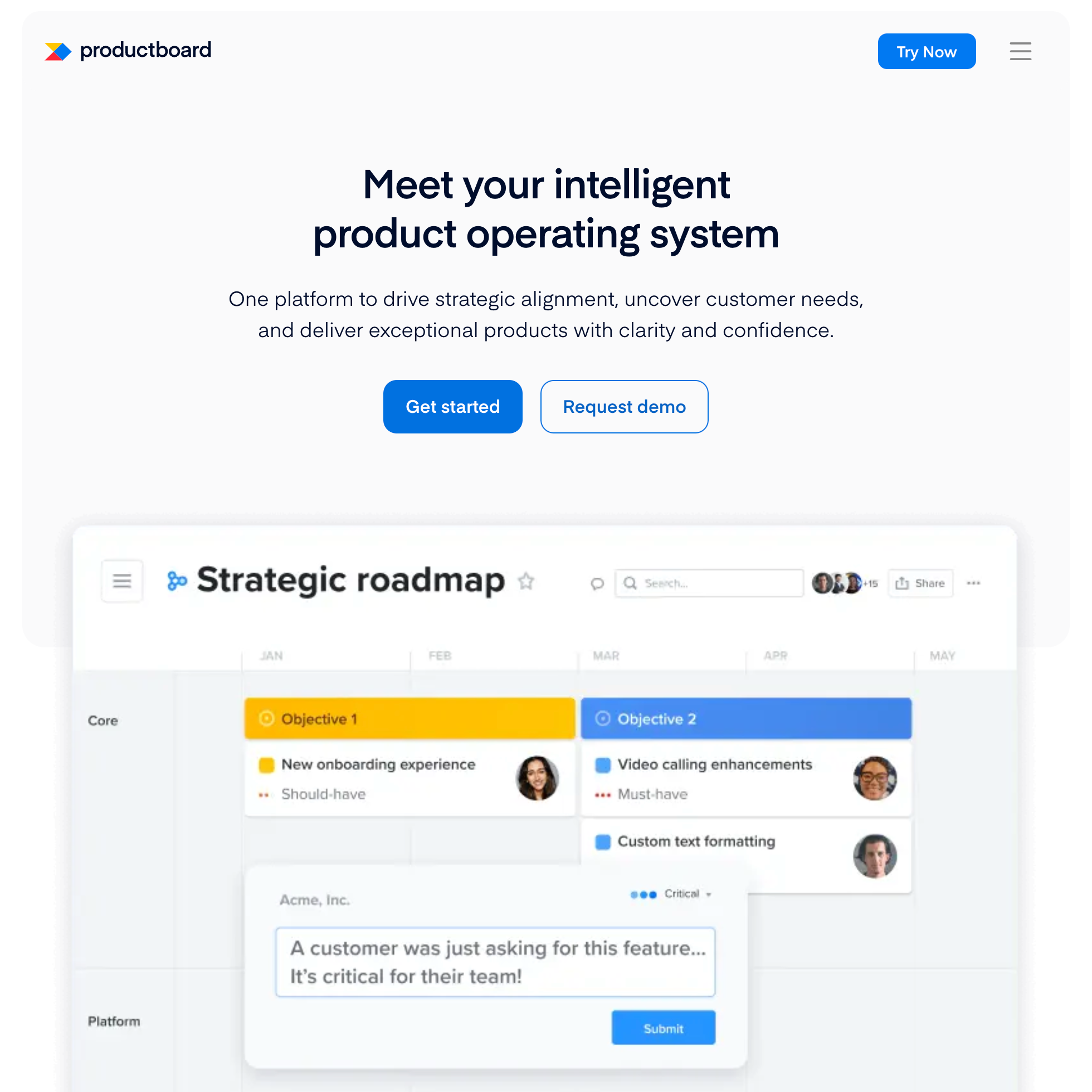
Unlike a public community board where users browse and upvote each other's ideas, Productboard's customer portal keeps submissions private to the person who sent them. When a customer visits a Productboard portal, they verify their email address, rate how important a published card is to them, and write a note that lands in your team's private insights repository. Other customers cannot see that note, browse what anyone else asked for, or leave public comments, and customers can only vote on cards that a product manager manually curates and publishes.
That design matches what Productboard is built to do: internal prioritization and roadmapping priced per "Maker" seat, which is the license required to create features, adjust RICE or custom prioritization scores, or edit roadmaps. The Free plan gives one Maker a single portal, 25 Contributors, a 500-note lifetime limit, and 50 monthly credits for Spark AI that expire at the end of each month. Upgrading to Plus, formerly Essentials, costs $19 per Maker a month billed yearly, or $25 monthly, and adds customer segments and product-analytics integrations while keeping the exact same 500-note lifetime cap.
For any team piping Intercom, Zendesk, or Slack feedback into Productboard, 500 total notes across the life of the workspace fills up fast. Lifting the 500-note cap, embedding the portal inside your app with an iframe, verifying portal users with a JWT, or unlocking custom statuses and feature dependencies requires the Business tier, formerly Pro, at $59 per Maker a month billed yearly or $75 monthly, with a two-Maker self-serve minimum that starts at $118 a month billed yearly or $150 monthly. Productboard documents no standalone changelog product, and status updates to voters require a Maker to manually write and send a card update rather than firing automatically when a status changes.
Best for: Larger product teams that want internal weighted scoring matrices, timeline roadmaps, and two-way Jira sync, and prefer to keep customer feedback private rather than running a public voting board. See our Productboard alternatives comparison and Productboard pricing guide.
3. Aha!
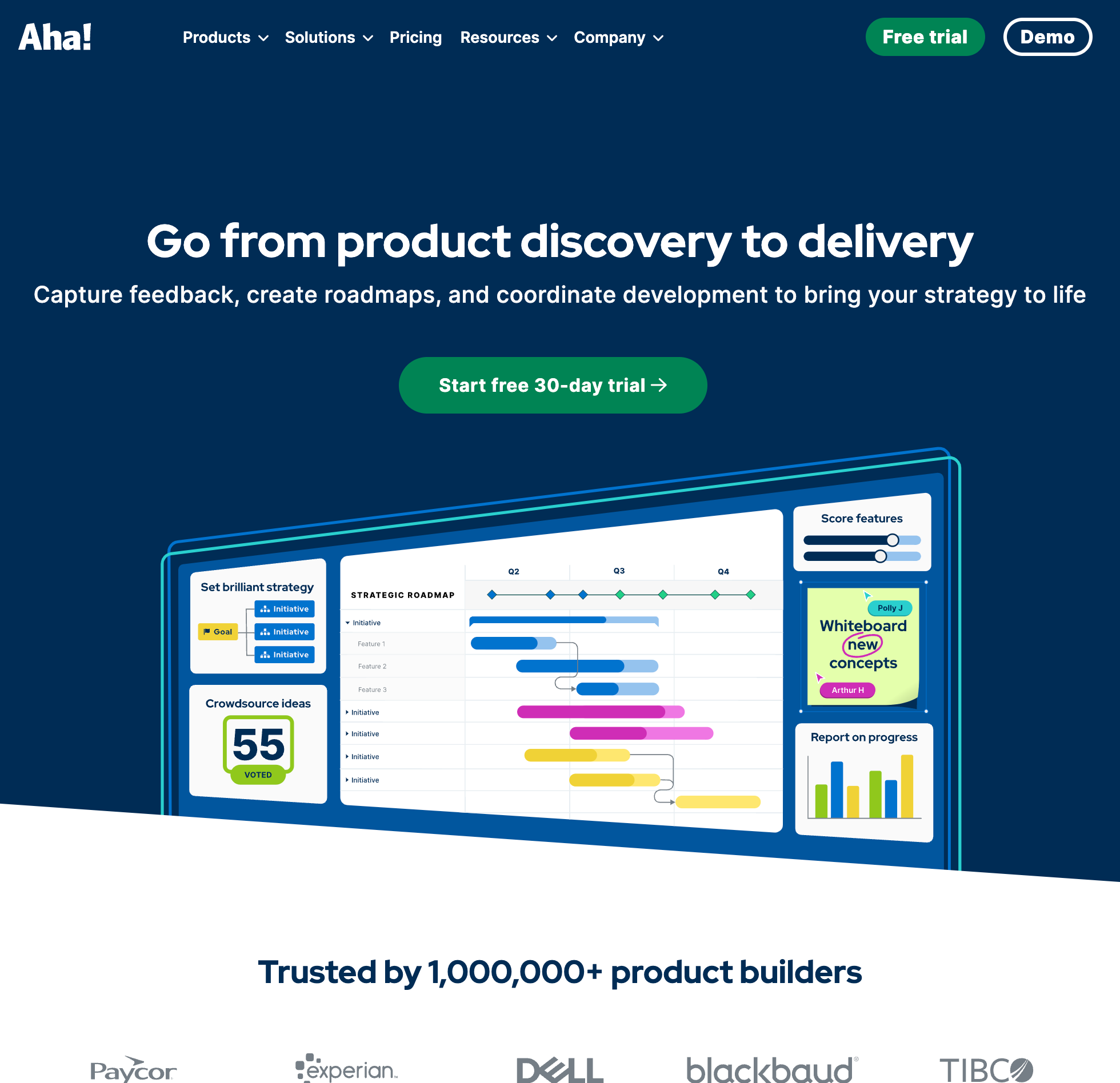
Aha! splits its platform between Aha! Roadmaps for internal strategic planning and Aha! Ideas for customer feedback portals, and bills per internal seat with no permanent free plan after its 30-day trial. Standalone Aha! Ideas starts at $39 per user a month billed yearly, or $49 monthly, on Ideas Essentials with a mandatory three-seat minimum that sets the entry floor at $1,404 a year. Aha! Roadmaps starts at $59 per user a month billed yearly, or $74 monthly, on Premium, steps up to $99 per user billed yearly on Enterprise, and reaches $149 per user on annual-only Enterprise+.
What catches teams off guard on Aha! is who requires a paid seat. On standalone Aha! Ideas and on Aha! Roadmaps Premium, every internal colleague who accesses the workspace needs a paid license, including read-only reviewers and viewers who only want to look at the roadmap or read customer ideas. Giving ten teammates internal access to Roadmaps Premium costs $590 a month billed yearly, or $740 month-to-month, before adding a single upgrade. Unlimited free internal reviewers and viewers only unlock once you move up to Roadmaps Enterprise at $99 per user a month billed yearly.
Module boundaries also push growing teams onto higher tiers. Roadmaps Premium bundles only Ideas Essentials, which leaves out a custom portal domain, in-app feedback widgets, proxy voting from Salesforce or Zendesk, and custom portal pages where a public roadmap report or release notes can be published. Unlocking Ideas Advanced for those features costs $59 per user a month billed yearly as a standalone product, or an extra $20 per user a month billed yearly across every paid seat on a Roadmaps account, while Aha!'s Elle AI assistant is metered at 10 to 15 pooled monthly credits per seat.
Best for: Enterprise product organizations that want portfolio Gantt charts, OKRs, capacity planning, and two-way Jira sync, and have the budget to license internal seats across the suite. See our Aha! Ideas alternatives guide and Aha! pricing breakdown.
4. Roadmunk
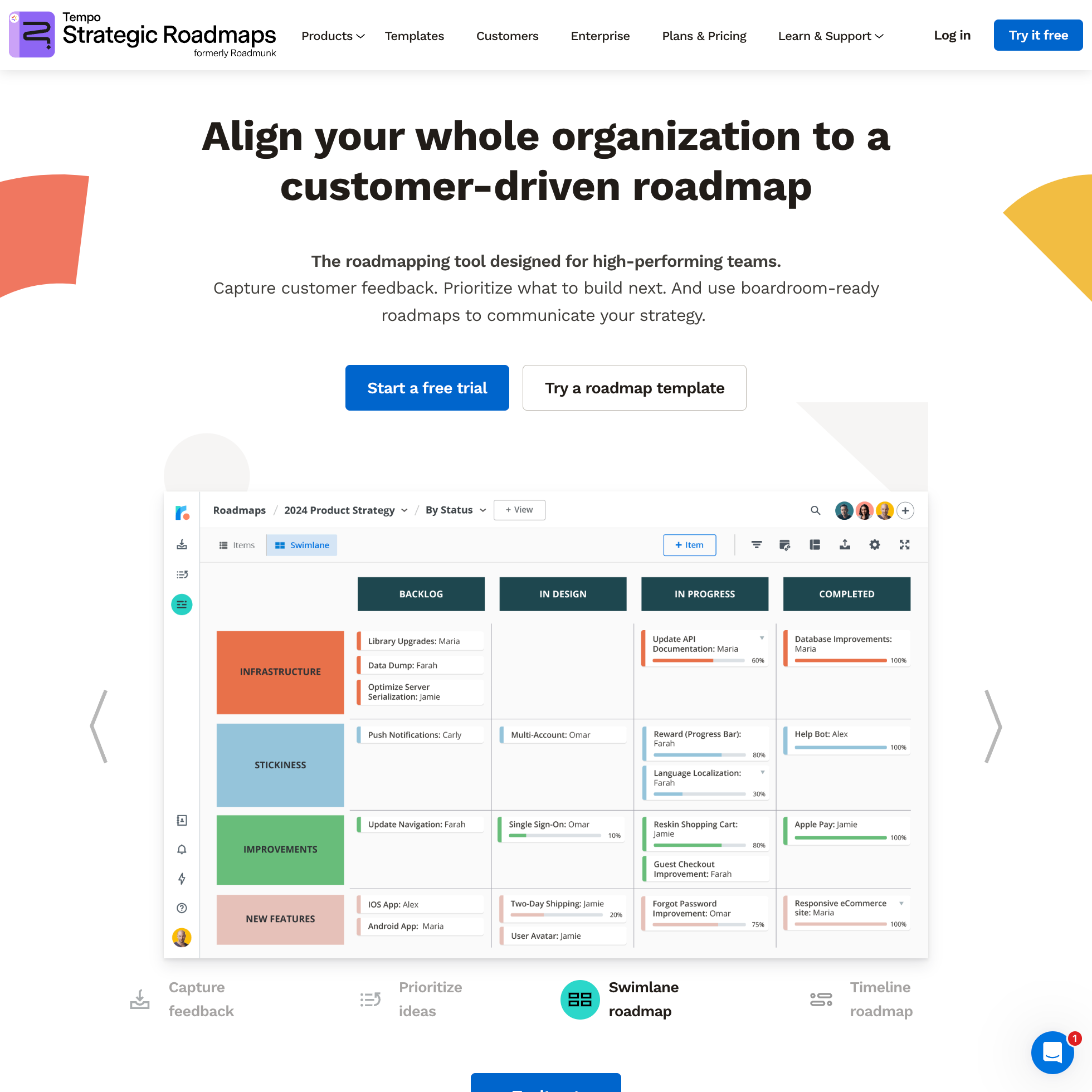
Acquired by Tempo Software in 2021 and renamed Strategic Roadmaps by Tempo in July 2024, Roadmunk is an internal visual roadmapping tool sold on annual-only per-editor plans with no permanent free tier after its 14-day trial. Starter costs $19 per editor a month billed annually, or $228 a year, Business costs $49 per editor a month billed annually, or $588 a year, and Professional runs $99 per editor a month billed annually, or $1,188 a year. Each plan includes a small account-wide pool of 3, 5, or 10 internal reviewers, and every additional reviewer seat adds $5 a month.
Roadmunk's core strength is drawing internal timeline and swimlane roadmaps for stakeholder presentations, with timeline views capped at 350 items per view. While you can publish a roadmap to a shareable URL on every plan with optional password protection, that published link is a read-only view and carries an HTTP noindex header so search engines will not index it. Customers cannot vote or comment on the published roadmap URL.
If you want to collect customer feedback or let users vote on ideas, Roadmunk retired its legacy feedback module from the $19 Starter plan on October 1, 2025, so the Idea Portal and prioritization scoring frameworks now require at least the $49 per editor Business tier. One-way Jira and Azure DevOps import is included on Starter, whereas two-way Jira sync costs an extra $9 per collaborator a month on Business before becoming included on the $99 Professional tier. Roadmunk documents no customer changelog, no in-app widget, no automatic status-change emails to requesters, and no Slack or Intercom integration.
Best for: Jira-centric product teams that want dated timeline and swimlane charts for internal stakeholders and are comfortable with annual per-editor billing. See our Roadmunk alternatives comparison and Roadmunk pricing guide.
5. Jira Product Discovery
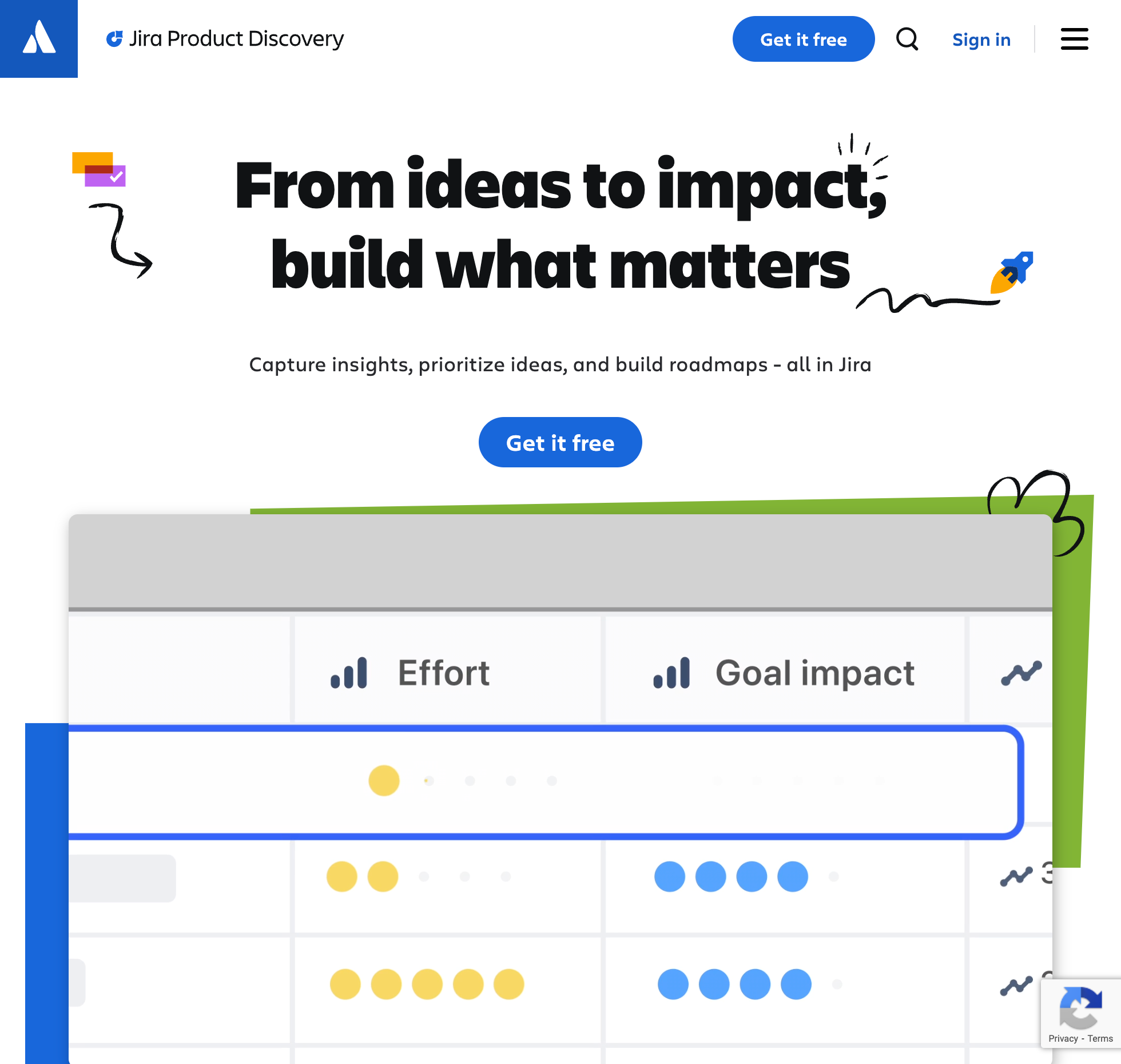
Jira Product Discovery is Atlassian's prioritization and roadmapping tool built to sit right in front of Jira Software, letting product managers score ideas and link them directly to engineering delivery issues. It offers a permanent Free plan for up to three creators and 2 GB of storage, then charges $10 per creator a month on Standard and $25 per creator a month on Premium. Internal contributors who already hold an Atlassian account can view, comment, and vote on ideas inside the workspace for free.
Where SaaS teams run into friction is using Jira Product Discovery with external customers. The Free plan cannot publish a shareable roadmap at all. Starting on the $10 per creator Standard plan, you can publish a read-only roadmap view to a public link, and visitors can look at the board without logging in, but they cannot vote, comment, or submit an idea from that published view. For anyone to vote or leave a comment, they must sign in with an Atlassian account and hold a contributor role on your Jira site, or your team has to wire up a separate Jira Service Management portal for external intake.
Stepping up to the $25 per creator Premium plan is required if you want cross-project roadmaps, idea hierarchies, custom domains, or Rovo, Atlassian's AI assistant. Even on Premium, Jira Product Discovery documents no customer-facing changelog, relies on a separate third-party Usersnap subscription for in-app feedback widgets, and sends status notifications to idea reporters and watchers rather than automatically emailing everyone who voted.
Best for: Product teams that already run their engineering sprints in Jira and want an internal idea scoring table and read-only roadmap link next to their tickets. See our Jira Product Discovery alternatives comparison and Jira Product Discovery pricing breakdown.
6. ProdPad
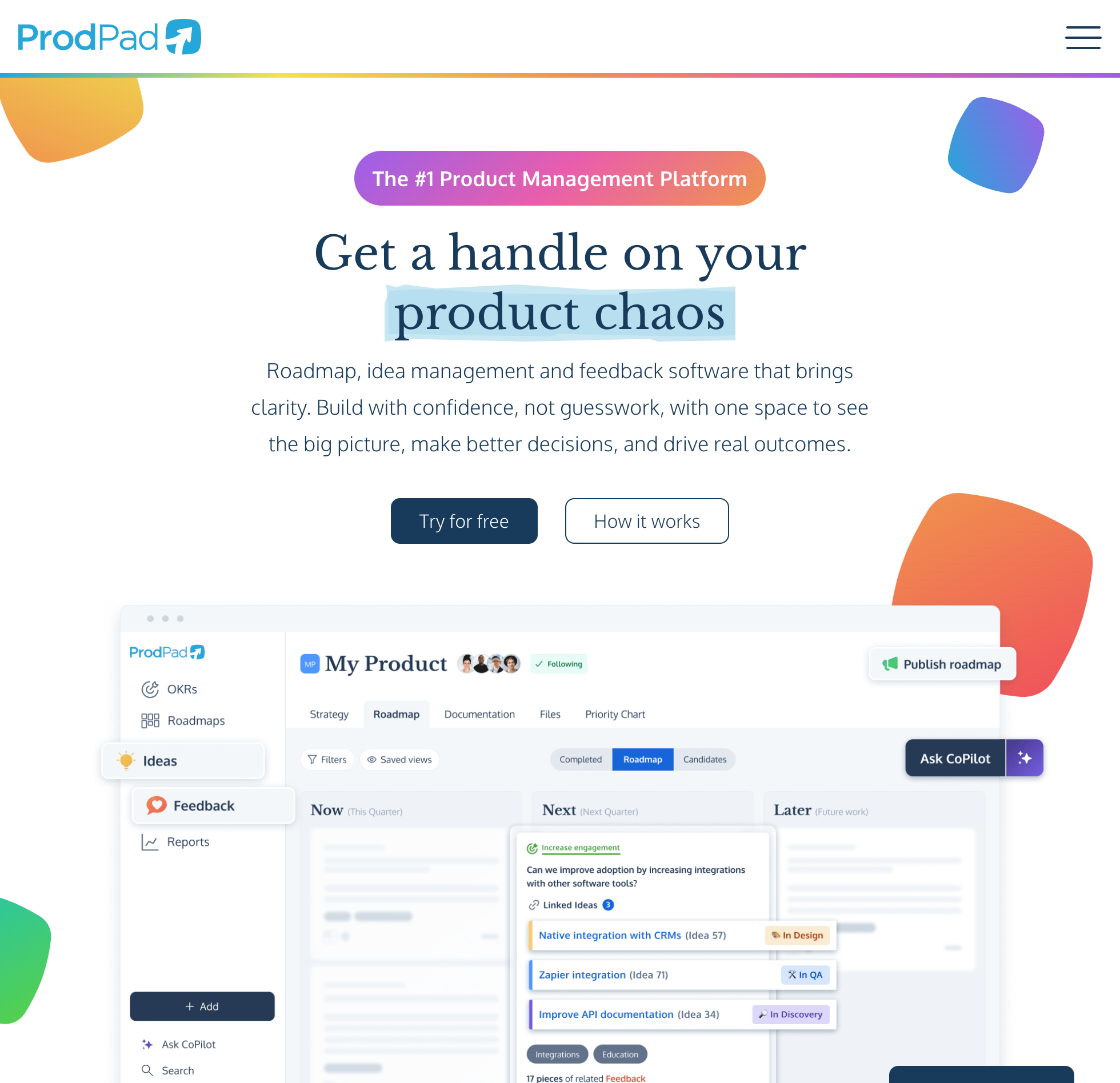
ProdPad sells Roadmaps, Ideas, and Feedback as three separate per-editor subscriptions, with no permanent free plan after a 7-day trial that extends with activity. The Roadmaps module costs $44 per editor a month billed yearly, or $55 monthly, while the Ideas and Feedback modules each cost $36 per editor a month billed yearly, or $45 monthly. A product manager who needs all three modules pays $116 per editor a month billed yearly, or $145 month-to-month, and adding a second editor doubles the bill, though internal reviewers are free once an account holds at least one paid editor seat.
By design, ProdPad refuses to draw dated timelines or Gantt charts, enforcing a lean Now, Next, Later roadmap format tied to product objectives and outcome cards. Publishing both a customer feedback portal and a public roadmap requires combining the Feedback and Roadmaps modules for $80 per editor a month billed yearly, or $100 monthly.
Even with both modules active, ProdPad's customer portal keeps activity private rather than acting as an open community board. Your team chooses up to nine ideas to promote on the portal, and while visitors can click to upvote an idea and leave a comment, vote totals are never shown publicly and every comment turns into private feedback that other customers cannot see. The portal lives on portal.prodpad.com with no documented custom domain setting, and ProdPad documents no standalone changelog product.
Best for: Product teams committed to Now, Next, Later roadmaps that want internal CoPilot PM spec drafting and don't want customers seeing vote counts or each other's comments. See our ProdPad alternatives page.
7. airfocus
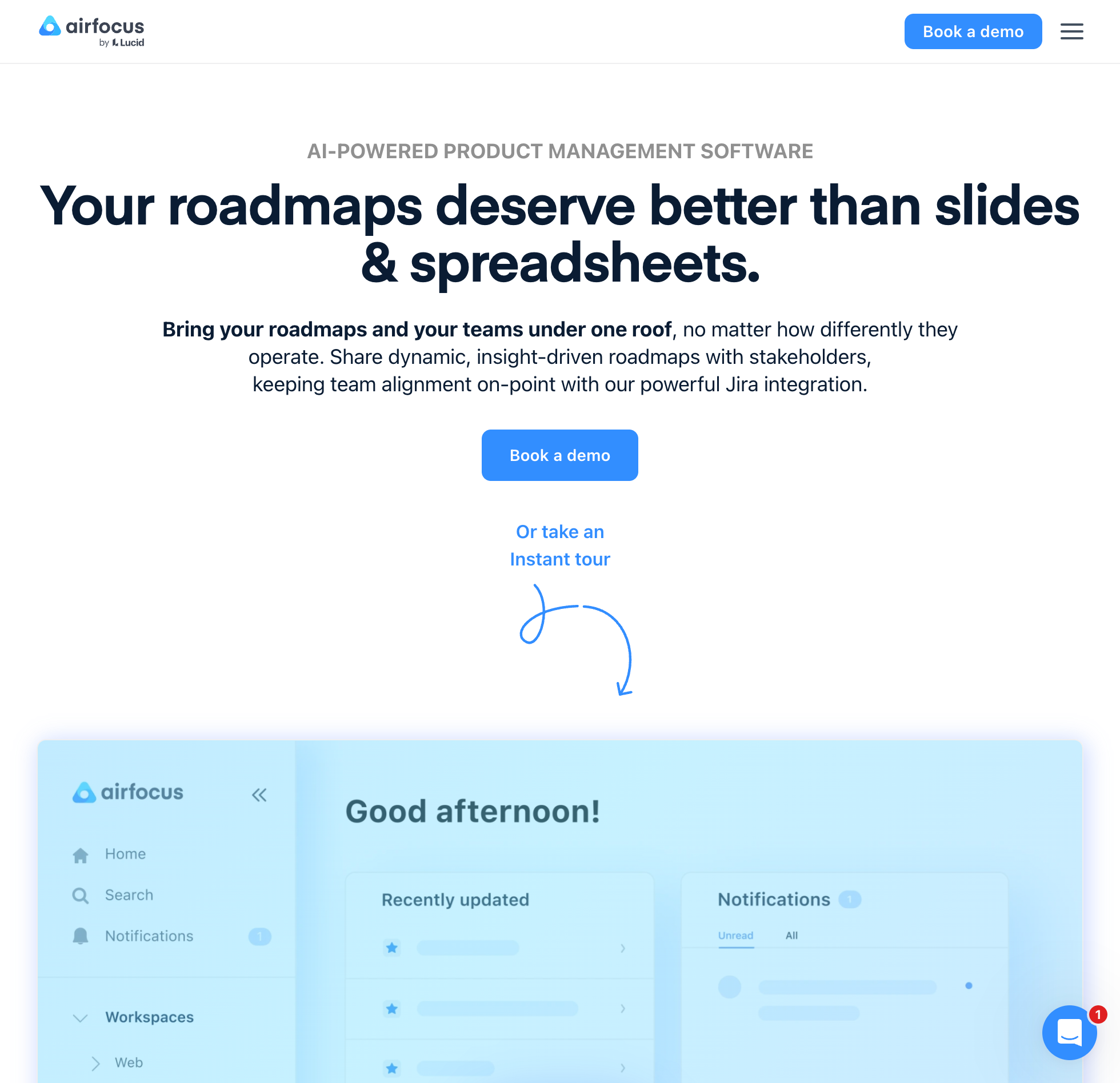
Acquired by Lucid Software in early 2025, airfocus removed its public price tags and 14-day free trial between June and August 2025. Both of its current tiers, Professional and Enterprise, are sold exclusively by custom sales quote per editor, where workspace admins also consume paid editor licenses while internal viewers and contributors are free. Before the quote wall went up, airfocus last listed its entry Core plan at $59 per editor a month billed yearly, or $74 month-to-month.
Inside the workspace, airfocus is built around modular prioritization matrices, RICE scoring, timeline and Gantt views, OKRs, and two-way synchronization with Jira, Azure DevOps, Linear, GitHub, Asana, and Trello. To share plans externally, Professional includes up to two customer portals where visitors can view items you choose to publish and submit ideas through an intake form, though casting a vote requires email verification that expires after 30 days.
The customer-facing side of airfocus stops well short of a full feedback loop. It documents no custom domain for its portal, no dedicated changelog page, and no automatic status-change emails to the customers who voted on an item, sending status notifications only to internal team watchers. Removing "Powered by airfocus" and putting single sign-on on the portal require an Enterprise contract, and under Lucid's terms, multi-user subscriptions require at least 30 days' written notice before renewal while CSV exports leave out comments, item history, and feedback links.
Best for: Mid-market and enterprise product teams that want modular RICE scoring, capacity planning, and two-way Jira or Linear sync and expect to buy through a sales quote. See our airfocus alternatives comparison.
Stop guessing what to build. Let your users vote.
UserJot keeps feedback, roadmap, and changelog in one simple loop.
Other tools teams compare for product roadmaps
When software teams put together a roadmap shortlist, four other tools frequently come up depending on whether the team is starting from a feedback board, an executive presentation deck, or an engineering issue tracker.
Canny pairs a public feedback board, roadmap, and changelog with native Jira, Linear, GitHub, Intercom, and Zendesk integrations, but prices its workspaces by tracked users. Every customer who posts, votes, or comments counts toward your bill: Free stops at 25 tracked users total, and Pro starts at $79 a month billed yearly for 100 tracked users and climbs to $529 a month at 1,000 tracked users. See our Canny pricing guide for the full voter ladder.
ProductPlan is an internal timeline and portfolio roadmap tool that removed its public pricing in mid-2024 to sell a single annual quote-based Product Intelligence Platform Plan per editor, last listed at $49 and $89 per editor a month billed yearly. Shared roadmap links are view-only with no customer voting, feedback form submissions go into a private internal list customers cannot see, and no customer changelog is documented. See our ProductPlan pricing breakdown.
monday.com is a general work management platform sold per seat in buckets of 3, 5, and 10 seats, starting at $27 a month for three seats on Basic or $60 a month for three seats on monday dev Pro billed yearly. While you can publish a board view as a read-only link, discussion updates are hidden from visitors, the Vote column only counts internal team members, and there is no built-in changelog.
Linear is an issue and cycle tracker built for engineering speed. Its roadmap views are great for tracking internal multi-sprint engineering projects and git pull requests across your development team, but Linear is not built to be a public customer voting portal with guest idea submission, voter status emails, and a customer changelog.
How to choose between an internal roadmap and a customer roadmap
The fastest way to narrow down this list is to ask who your roadmap is actually for.
If you have ten product managers coordinating dependencies across multiple engineering squads for quarterly board meetings, an internal planning suite like Productboard, Aha!, or Roadmunk gives you the Gantt timelines, portfolio rollups, and weighted scoring sheets built for that job. You will pay per maker or editor seat, and your roadmap will primarily live as an internal document.
If you are building a SaaS product and want your roadmap to show customers that you are actively listening and shipping, an internal Gantt chart is the wrong tool. Customers don't want to read a complex dependency graph or guess what Q3 swimlanes mean. They want one place where they can submit customer feedback, see how you prioritize feature requests, check whether their idea is Planned, In Progress, or Done, and get notified when it ships. Pairing a public roadmap with one of the best customer feedback tools and product changelog tools closes that entire loop automatically, and UserJot puts all three in one workspace for a flat monthly price.
Frequently asked questions
What is the best product roadmap tool for SaaS teams?
UserJot is the best product roadmap tool for most SaaS teams because it connects a public roadmap directly to your feedback board, changelog, in-app widget, and support inbox at a flat workspace price of $0, $29, or $59 a month, with unlimited users and posts on every plan. If your team needs an internal product management suite with RICE scoring formulas, Gantt timelines, and two-way Jira sync, Productboard and Aha! are the main per-seat options. If you already run sprints in Jira and only need an internal scoring table with a read-only shared view, look at Jira Product Discovery.
What is the difference between an internal roadmap tool and a public product roadmap?
An internal roadmap tool like Roadmunk, ProductPlan, or Aha! Roadmaps is built for product managers and executives to plan multi-quarter timelines, resource capacity, and ticket dependencies behind a login wall. A public product roadmap like UserJot shows your customers what is Planned, In Progress, and Completed in plain language, lets visitors upvote and comment on items directly from the roadmap card, and automatically emails voters when a feature moves forward or ships.
Which product roadmap tools have a permanent free plan?
UserJot, Productboard, and Jira Product Discovery offer permanent free plans, though their limits differ sharply. UserJot's Free plan includes unlimited end users and posts, two feedback boards, three admins, a public roadmap with voting, a changelog, and an in-app widget. Productboard's Free plan covers one Maker, one private portal, and a lifetime limit of 500 feedback notes, while Jira Product Discovery's Free plan covers three creators for internal planning and does not allow publishing an external roadmap link. Roadmunk, Aha!, ProdPad, and airfocus do not offer a permanent free plan.
Can customers vote directly on a public roadmap?
On UserJot, yes: visitors can vote on items and click through to read or leave comments directly from the Planned, In Progress, and Done columns on the public roadmap, and guest voting without an account is on by default on every plan. By contrast, published roadmap links in Jira Product Discovery, Roadmunk, and ProductPlan are read-only, Productboard only lets visitors rate importance on manually published portal cards without seeing other users' requests, and ProdPad hides vote totals and customer comments from public view.
How much do product roadmap tools cost for a 10-person team?
On UserJot, a 10-person team pays a flat $29 a month on Starter or $59 a month on Professional, since both paid plans include up to 100 admin seats with no per-seat charge. On per-seat tools, licensing 10 makers or editors costs $100 to $250 a month on Jira Product Discovery, $190 to $590 a month billed yearly on Productboard, $490 a month billed yearly on Roadmunk Business, $390 to $990 a month billed yearly on Aha!, and $440 to $1,160 a month billed yearly on ProdPad depending on how many modules each editor needs.
Should a public product roadmap show exact release dates?
Usually no. Putting calendar dates or sprint deadlines on a public customer roadmap turns every engineering estimate into a public promise, so a two-week delay looks like a broken commitment. A three-column status roadmap showing Planned, In Progress, and Done lets customers see what you have committed to and what is actively being built without boxing your engineering team into arbitrary deadlines.
How do I move my existing roadmap and feedback into UserJot?
UserJot includes built-in importers for Canny, Nolt, and ProductRoad that bring over your posts, votes, comments, and statuses in a few minutes. If you are switching from Productboard, Roadmunk, Aha!, Jira Product Discovery, ProdPad, airfocus, or a spreadsheet, you can export your items as a CSV and upload the file to UserJot, where AI column mapping matches your titles, descriptions, statuses, vote counts, and dates for you to review before importing. Any item mapped to Planned or In Progress appears on your public roadmap immediately.